
Loading...
Loading...
Understand commercial door fire ratings, labels, temperature rise, glazing and hardware—and gather the right details for a complete product quote.
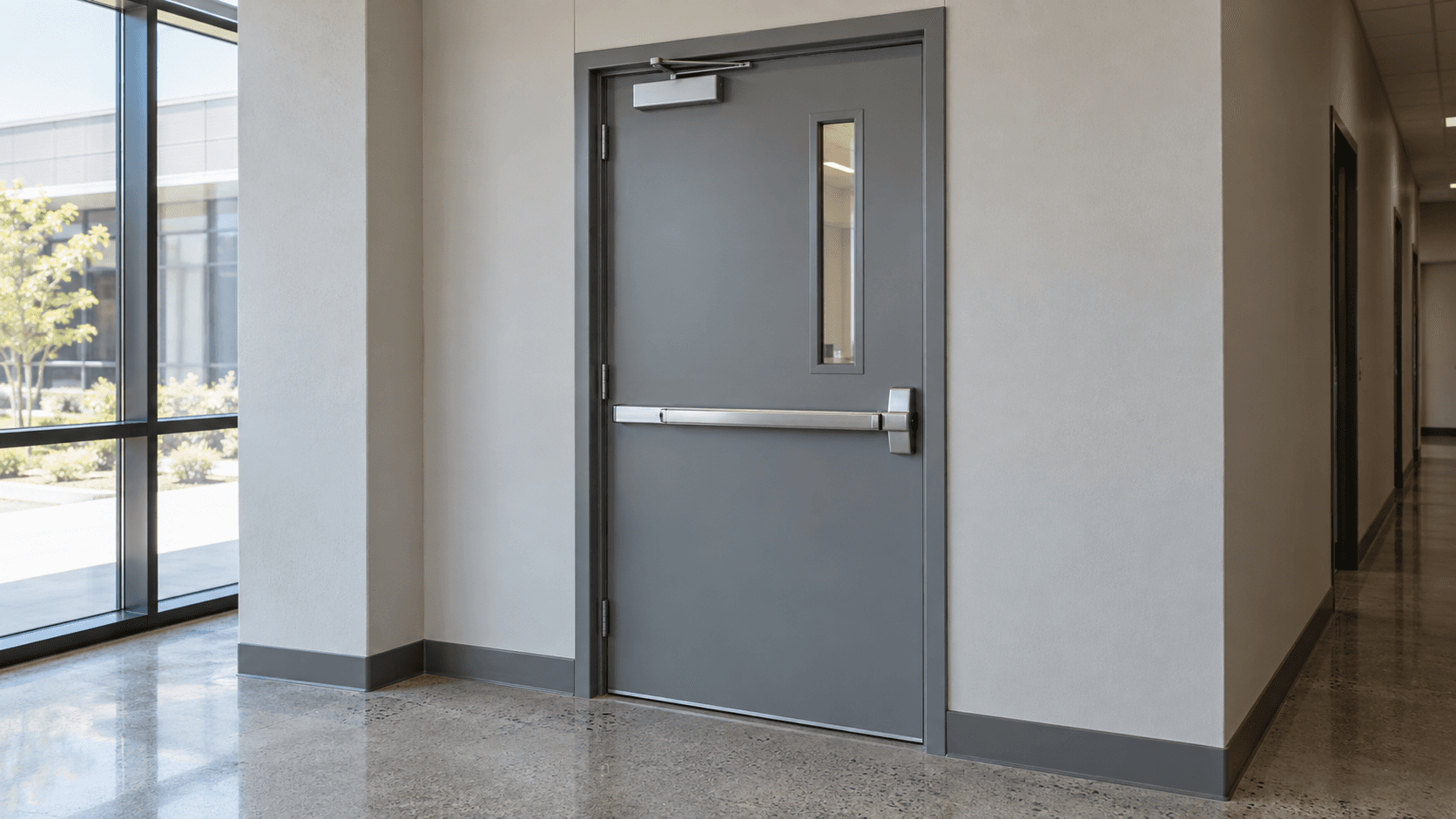
A door fire rating states how long a door meets the requirements of a prescribed fire test. Common swinging steel-door ratings include 20, 45, 60, 90 and 180 minutes. The number describes performance under test conditions; it is not a guarantee of escape time during an actual fire. See Steel Door Institute's SDI 118 guide.
For a commercial project, the rating is only the start of the order. The proposed door, frame, glazing and hardware must be suitable for the opening's requirements. Start with the opening number on the approved schedule, then check the products and supporting documents together.
A 90-minute fire-rated door is one common option, not the default for every commercial opening. A request for “90-minute doors with glass” still leaves the size, frame, vision panel and hardware unspecified. Put the required duration beside each opening ID so those details can be reviewed together.
Not necessarily. The wall's function, the opening's location and the applicable code determine the required opening protection. There is no universal rule that a door must equal the wall rating, or that every door needs three-quarters of that rating. SDI 118 describes different applications and exceptions.
If the wall schedule and door schedule disagree, identify the opening and drawing revisions in a clarification request to the design team. Keep the answer with the current schedule. Choosing the larger number on your own does not resolve the requirements for the rest of the assembly.
Certification markings help identify the product, rating and applicable conditions of use. The label on a door leaf does not establish that any frame, glass or hardware can be combined with it. Check the proposed components against their listings and the project requirements. See UL Solutions' doors and hardware guide.
For an existing opening, send clear photographs of the entire doorway, door label, frame marking and hardware. Include the manufacturer and model when available. A cropped image showing only “90 MIN” gives the reviewer much less to work with.
Some certified fire-door frames carry a certification mark without an hourly rating. Their permitted use depends on conditions including wall construction and anchoring. A missing number is neither proof that the frame is unrated nor permission to use it in every rated opening. See UL's frame-label guidance.
Record “frame certification requires verification” when that information is missing. Do not copy the door's rating into the frame field or assume the existing frame can remain solely because the replacement leaf fits.
A temperature-rise rating addresses heat passing to the unexposed face of a door during the first 30 minutes of the standard fire test. Values such as 250°F, 450°F and 650°F describe the permitted rise above the starting temperature, not the fire's temperature or an extension of the door's hourly rating. See SDI's temperature-rise explanation.
Smoke and draft control also require a separate check. An hourly fire rating alone does not establish air-leakage performance. Where the project specifies smoke control, confirm the relevant markings, seals and assembly requirements with the product documentation. See UL Solutions' application guide.
Include each specified requirement in the quote request. A single “fire rated” checkbox can hide information the supplier needs.
Yes, when the glazing and supporting components meet the requirements of the listed opening assembly. The two main glazing categories need careful distinction:
Technical Glass Products explains these glazing categories. The product listing governs the permitted configuration and dimensions. Neither the glass's appearance nor an ordinary safety-glass designation establishes a fire rating or a smoke-control rating for the complete doorway.
Specify the glass product, vision-panel dimensions and compatible frame or light kit. If a proposal says only “glass included,” ask for the missing product details before comparing it with a fully specified quote. Our tempered-versus-laminated glass guide covers those separate safety-glass choices; it does not establish their suitability for a rated opening.
Fire exit hardware and panic hardware are not interchangeable labels. A device tested only for panic use does not establish suitability for a fire-rated door. Closers, latching devices and other accessories also need to match the opening's requirements. See UL's doors and hardware guide.
Send the hardware set number and any electrified functions with the door inquiry. For a substitution, show the specified product and proposed replacement side by side, with supporting information. Similar appearance should not be the basis for accepting a change.
Organize the package by opening number:
Keep unresolved details and supplier exclusions beside the price. A proposal that omits hardware or assumes different glazing is not the same package at a lower cost. Ask for clarification before releasing the order.
Use Elev8's doors, frames and hardware overview and DFH resource library to organize your product references. Elev8 Fabrication and Distribution supplies commercial doors, frames and hardware. Send your opening schedule and specifications for a product quote, including questions that still need a design-team answer.
Header image: AI-generated architectural illustration; no specific certified product or fire rating is depicted.
Published on September 19, 2026
No. Material alone does not establish a rating. Verify the specific product's identification, certification and permitted use before treating it as a fire-rated door.
No. Use the rating required for the specific opening in the approved project documents. Its location, wall function and applicable code affect that requirement.
Not necessarily. Some certified frame markings omit an hourly number. Check the certification and its conditions of use, including the wall construction and anchoring requirements.
An ordinary safety-glass specification does not establish fire performance. The glazing product, dimensions and supporting components must meet the requirements of the listed opening assembly.
The fire rating states a test duration. The temperature-rise rating limits the increase in temperature on the unexposed face during the first 30 minutes of testing. They describe different aspects of performance.
Contact our team to learn more about our products and services, or request a quote for your next project.